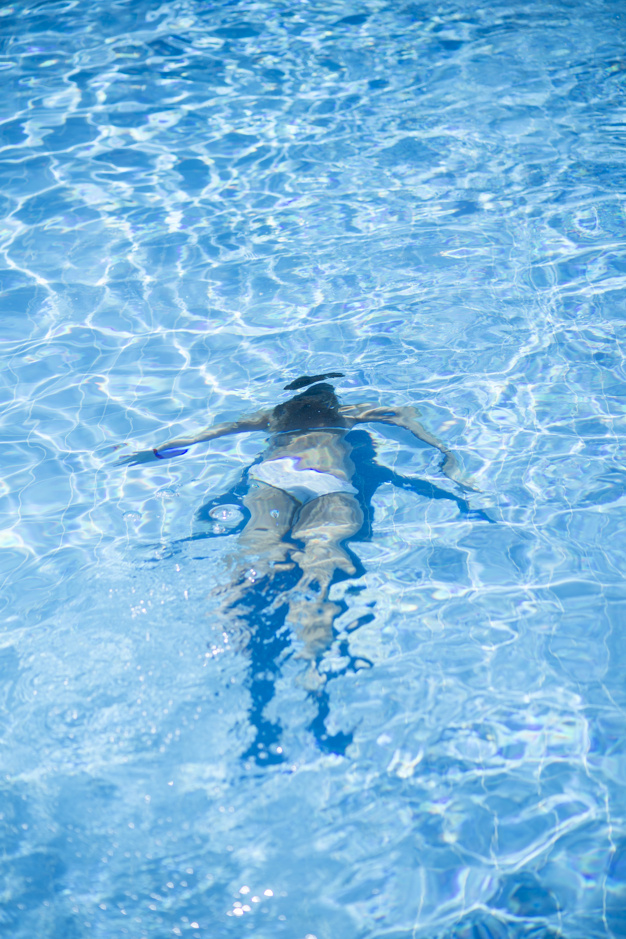
Aquarine system is a tested and approved product that was introduced on the market to fill a gap which currently available products have not been able to fill. Interviews with thousands of pool owners have allowed us to determine that problems occur during heat waves, among them: algae formation, instability in pH levels and questionable water clarity. Aquarine system works to fight off these problems by: Controlling algae Stabilizing pH levels Clarifying water Allowing you to use up to 50% less chlorine All the ingredients that make up this tested and proven solution have been stabilized, calibrated and chosen specifically to: Reduce amount of chlorine traditionally required to maintain pool water. Eliminate the need for any other chemical product when treating pool water. Aquarine system is registered by Health Canada.
Yes. It is completely safe to use Aquarine system in your Jacuzzi or Spa to improve water clarity.
You can start using Aquarine system at any time during the season. Aquarine system can also be used in water where many chemical products have been used or where high concentrations of chlorine exist. Please refer to the "Easy to use" page for more details.
Aquarine system is compatible will all types of chlorine, bromine, lithium and peroxide (active oxygen).
Aquarine system is compatible will all types of chlorine. On the market, you will find the following types of chlorine: Calcium hypochlorite Sodium hypochlorite Trichloro-s-triazinetrione Sodium dichloro-s-triazinetrione 1. Calcium hypochlorite Calcium hypochlorite is composed of white granules and has a strong chlorine odour. Developed by OLIN in 1928, this manufacturing process has provided for producing concentrated chlorine. This process was called "High Test Hypochlorite". Nowadays, it is better known as its abbreviation, HTH. Active strength: 65% Available chlorine content: 65% pH: 11 Advantages: Easily handled No significant storage decomposition Disadvantages: Raises pH Chlorine residual in pool dissipates rapidly in sunlight Can cause turbidity, scale, clogged filters if pH and/or T.A. are high 2. Sodium hypochlorite Sodium hypochlorite is only stable as a solution. First produced in 1785 by bubbling chlorine gas into a solution of lye, in a chemical plant in Javel, France - hence the name "Javelle Water". Often called by the misnomer "liquid chlorine", it is sold under the brand Javex as laundry bleach. Pool chlorine bleach is double the strength of laundry bleach. Active strength: 10.8% (12% commercial) Available chlorine content: 10.3% pH: 13 Advantages: Completely miscible in water As bulk liquid it is the least expensive source of chlorine sanitizer except for gas chlorine Disadvantages: Bulky and heavy to handle Bleaches clothes, carpets, etc. Raises pH Significant decomposition in storage High T.D.S. Chlorine residual in pool dissipates rapidly in sunlight 3. Trichloro-s-triazinetrione Sometimes called "trichlor" for brevity, this white granular powder is formulated into tablets when used for swimming pool application. Trichlor is the most active of pool chlorines. This property should be respected from both usage and storage standpoints. Active strength: 100% Available chlorine content: 90% Stabilizer content: 56% pH: 2,8 Advantages: Easily handled Slow-dissolving Good for chlorinators Chlorine residual stabilized Disadvantages: Reduces T.A. Lowers pH Readily supports combustion on contact 4. Sodium dichloro-s-triazinetrione For brevity this white granular substance is called "dichlor" or "sodium dichlor". It is also sold in dehydrated form. Much as stabilized tablets, it is popular on residential markets and is sold in many different-sized containers, under many brand names. Active strength: 100% Available chlorine content: 62% Stabilizer content: 57% pH: 6.7 Advantages: Easily handled Fast-dissolving Little effect on pH Chlorine residual stabilized Disadvantages: Most costly chlorine sanitizer
Specialists recommend you overchlorinate your pool regularly. Trichlor chlorine users can benefit from overchlorination as it can periodically reactivate the stabilizer found in the pool water. When? Once a week. It is suggested that you overchlorinate following hot weather spells or overuse of the pool. Overchlorination does not affect the performance of Aquarine system.
No additional products are required except for chlorine or bromine. Keep in mind that the pool water quality levels may fluctuate and need special treatments especially when weather conditions are extreme.
Yes, Aquarine system is compatible with all types of water heaters and can be used safely in heated pool environments.
Aquarine system is completely safe for all users when it is used in compliance with the instructions provided on the product label. Aquarine system is registered by Health Canada. This accreditation confirm that the product is efficient and safe. Similarly to all other domestic products, you must keep the product container closed and keep it away from the reach of children. When using, do not mix it with other products.
Yes, the product will be as efficient next season. Just make sure that like any other chemicals, the jar is tighly close and out of reach of children.
Yes, with no problem even before it is hot. Aquarine is a mild product NOT a shock treatment !
Yes. Aquarine with a salt water system will act the same. Crystal clear water, softer and algae free PLUS as a side effect, the electrodes ($) of your system will last longer !
Yes, Aquarine can be used with any type of filtration system. In the case of a cartridge system, aquarine will have to be added directly into the pool. (in front of the jets)